hi,有段时间没来社区,发现有很多新出来的项目,不少得到了spark 和 community DAO的支持,想了解一下这些项目实际的运营情况。不知道谁有统计,比如是否持续运行,用户数,活跃度之类的。谢谢
Hi, thanks for asking about this.
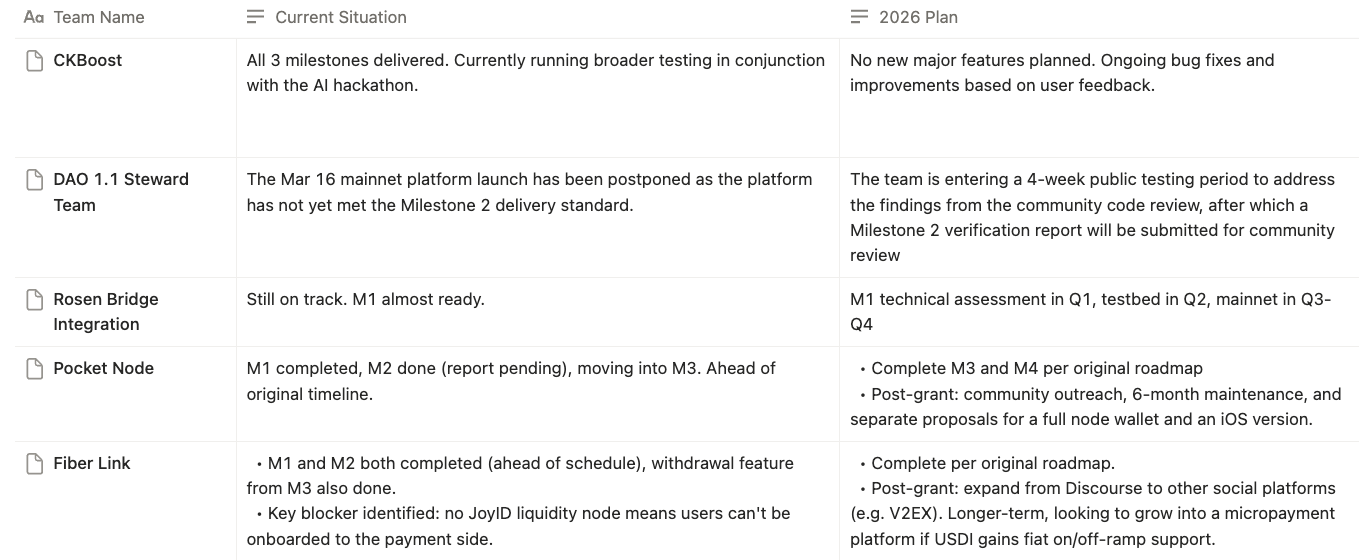
On the Community DAO side: As the DAO transitional period coordinator, I’ve compiled a descriptive overview of projects that passed DAO votes during my tenure, along with their 2026 plans. These are qualitative summaries rather than quantitative metrics, since most projects are still in active development. If you are really interested, I’d suggest asking directly in each project’s proposal thread, or hopefully, those project teams can share data here themselves. For projects that were approved before I took on this role, I have no info.
On Spark: Worth noting that Spark is a micro-grant program (around $1,000-2,000) designed for early-stage prototyping, concept validation, and seed user test within a 1–2 month cycle. Metrics like sustained operation, user count, or ongoing activity aren’t what Spark projects are scoped for. You can find information such as the reason for project approval/close, funding status, and project completion report for each project on the dashboard.
That said, some Spark projects do graduate into larger initiatives. For example, WarSpore · Saga completed its stage development and seed user testing through Spark and has just submitted a Community DAO proposal.
嗨,感谢关注这个问题。
Community DAO 方面: 作为 DAO 过渡期协调员,我整理了在我任期内通过 DAO 投票的项目的现状和 2026 计划。这些是描述性的情况汇总,没有定量数据,因为大部分项目仍在开发中。建议可以到各项目的 proposal 帖子下直接询问,也欢迎项目方看到后主动分享数据。我接手之前通过投票的项目暂时没有做统计。
Spark 方面: 需要说明的是,Spark 是小额资助计划(约 $1,000-2,000),定位是 1–2 个月内完成早期原型、概念验证和种子用户测试。持续运营、用户数、活跃度这类指标不在 Spark 项目的考核范围内。您可以在dashboard找到各个项目的立项依据、资助情况、结项报告等相关信息。
不过,部分 Spark 项目在结项后确实进入了更大阶段,比如 WarSpore · Saga 通过 Spark 完成了阶段性开发和种子用户测试,刚刚提交了 Community DAO 申请。
1 Like
感谢您的回复
我对ckb的公共治理比较感兴趣,感觉ckb似乎走的比任何我所知的公链都要激进,不知道对公共支出扶持的项目是否有一些持续性的要求,如果没有,是不是会出现大量驱利(只为申请补贴)项目的出现。
4 Likes
关于持续性: 目前 DAO v1.0 规则和已通过的 v1.1 规则中,都没有针对项目完成后的持续运营要求。DAO 的约束力边界是 milestone deliverable 的交付和验收:项目一旦完成所有 milestone 并拿到全部款项,DAO 与该项目的资助关系就结束了。规则也没有按项目类别(如基础设施、应用、活动等)做差异化要求。
关于防范 rent-seeking: v1.0 的主要防线在事前阶段,即社区讨论和投票门槛(预算 3 倍的 quorum等)。但在项目执行过程中缺乏制度化的 milestone 验收流程,实际操作中依赖个别社区成员自发跟进。
v1.1 针对这个薄弱环节做了补强,把监督从"事前投票"延伸到了"事中执行":引入 DAO Stewards 进行 milestone 验证并发布公开报告,社区对每个 milestone 拥有 veto 权,milestone 延期超过 30 天会自动触发 review 流程等。但坦诚的说,“事后” 项目是否持续运营并产生长期价值仍然不在当前规则的覆盖范围内。
这个缺口在去中心化的 grant 类治理体系中是普遍存在的,如果社区认为有必要引入 post-completion 的跟踪或评估机制,我觉得这本身就可以作为未来的治理提案来讨论。
On sustainability requirements: Neither the current DAO v1.0 rules nor the approved v1.1 rules impose any post-completion operational requirements on funded projects. The DAO’s authority ends at milestone deliverable verification. Once a project completes all milestones and receives full payment, the funding relationship is concluded. The rules also do not differentiate requirements by project category (infrastructure, applications, events, etc.).
On safeguards against rent-seeking: In v1.0, the primary defense lies in the pre-approval stage: community discussion and the voting quorum threshold (3x the requested budget, etc). However, v1.0 lacked an institutionalized milestone verification process during project execution, with oversight relying on individual community members volunteering their effort.
v1.1 addresses this gap by extending oversight from “pre-approval voting” into “in-progress execution”: DAO Stewards conduct milestone verification and publish public reports, the community holds veto power over each milestone payment, and delays exceeding 30 days automatically trigger a review process, etc. That said, post-completion tracking (whether a project continues to operate and generate long-term value) remains outside the scope of current rules.
This gap is common across decentralized grant-based governance systems. If the community sees value in introducing post-completion tracking or evaluation mechanisms, I figure it could become a governance proposal for future discussion.
1 Like
理解了,目前这个激励更像是启发式奖励,有想法能实现则可。
无意挑战这种方式,只是表达观点,这种方式难以达到有效的目标。
最近做治理调研,发现了很多公链有类似的想法,正还有一定的存活几率的是风险投资类项目(虽然也低到可怜),至少出资方和项目方都承担一定的风险,并获得相对公平的收益,项目也为公链带来一定的用户和繁荣。
目前dao和spark的受资助方并不承担风险,反而在ai工具发达的情况只需要完成一些想法即可以获得收益。这也是我开始问咱们是否要考察运营情况的原因。
大胆预测一下,这些被资助项目能够存活或者真正开始运营的几乎为0。因为这些项目的初衷就存在问题。
关注ckb这段时间我能感受到团队远大的理想与愿景,不过执行层面似乎存在较大问题,通俗的说就是不太清楚项目想做什么。
这点在公共治理过程中也比较忌讳,资源浪费 时间浪费让人觉得有些痛心。
我只是小持币人,说点心里话,希望团队能做一些调整,为华人争光。
4 Likes
是的,这也是我最近观察到的现象,才发出了这个:
What I hope to see in community-funded projects - English - Nervos Talk
你会发现近半年(市场变差后),来社区的项目突然变多了,甚至比之前CKB热度最高阶段还要多。是CKB在圈内的名气上升了吗? 我从公共曝光度上并没感觉到,给我的直觉是市场上钱不好赚了和Ai的加持的结果,当然社区里面也是有几个有意思的项目。所以这就需要注意不要让人抓到生态要害(之前说的community DAO1.0没有达到项目数量的预期)把资金这样消耗掉。在这种环境下能存留下来的也是有想法的人,但还是需要社区去辨别出好项目,而不是为了名义上的“众多”僵死项目。
这点也是我对核心团队诟病之一,没有 也可能就不知道自己的方向,只想着是自己造好了白纸,让人可以任意在上面画画。实际上团队是可以引导几个核心协议带社区超其方向上尝试,至于方向对与不对,行业本来就在早期,不对很正常调转方向即可。整体上是团队推动协议层建设与引导,社区在其协议上尝试创建出爆发式应用,然而CKB团队更像是个“贤者”之态,想把大多东西丢给社区去试着看,没有资本加持,涣散的社区和单薄的个体很难成有影响力的东西
3 Likes
@president_tin @Thinker One thing that might be worth keeping in mind is that low success rates are universal even in Web2. Projects like Polymarket, which are now considered successes, emerged from a massive pool of similar experiments where most didn’t make it. The hit rate was never the point; the portfolio was.
Spark and Community DAO are essentially doing the same thing funding a pool of early-stage bets with the understanding that most won’t scale, but a few will. Judging the program by whether every individual project sustained long-term user growth misses how early-stage funding actually works. WarSpore graduating from Spark to a DAO proposal is exactly the kind of pipeline this is designed to produce.
The real question isn’t how many projects are still running but is the program surfacing projects worth betting on at the next stage and from what’s been shared, it seems like it is. I do agree that the community needs to be better at identifiying good projects.
6 Likes
Web2 大量的投资前提是项目方有极高的机会成本甚至是对赌协议。
在 AI 工具普及下,完成想法的边际成本已趋近于零。如果没办法投入运营,对生态的帮助为零,且项目也无法成功。
我理解资助的目的是认为有概率成功,而不是一定会失败,这两者有天然差别,目前的状态在风险不对等的情况下,结果是一定会失败。这个目的就不是良性的。
我观点上面这位朋友说的一致,执行层面应该有一些方向和目标,这样或许有的想法能聚焦,真的要在ckb上做项目的团队能看到后能把它变成现实。
还是,希望ckb能成功,只不过现在的味道让人看不清走向何方
1 Like
These are good points and I think Spark has turned into an excellent launchpad for ideas to get off the ground.
I’ll admit, I originally didn’t see the true value in it, I thought the funding levels were going to be too low and was almost a waste of time, but now I see what the purpose is and how professionally it’s run, I think its the perfect way for projects to get prepared for a DAO proposal.
Of course some, maybe even most projects won’t be successful in the end, no one can expect that.
But this doesn’t mean that Devs can just come along and build things for their own enjoyment at the expense of the community’s funds.
Thanks to the work the core team and some other independent devs have done over the years, CKB is extremely well developed now and is ready for successful projects, there’s nothing standing in the way on the development side.
So the days of us just settling for anything are long gone, we now need apps with real business cases and most importantly, legit user generation plans, because what is the purpose otherwise?
4 Likes
我赞同你指出的问题,但是不太赞同对原因的分析。越了解ckb历史,创始人经历,在论坛看得越久,越觉得核心团队其实有创业和实际做事的经验,并不是只知道谈理想的xx,“只会谈理想”反而是一种刻板印象。我觉得ckb更像是一个有不少中心化项目经验的团队,很坚定的选择了一个去中心化的方向。至于这个方向好不好那是见仁见智,但我感觉方向是挺清楚的。
要选方向就不能不看大环境,这方面对ckb影响最大的其实是中国标签。如果考虑到这一点, 你要说自上而下自下而上哪个更有机会,哪个更“理想主义”,真不好说,懂的都懂。自上而下+中国项目这两个标签,其实已经有一个标杆cfx,合作一个又一个,rwa, esim, 稳定币,DAT财库公司,我记得之前还有人拿来酸ckb, 不知道现在还酸不酸。没被割过的人是不会有记忆的。如果自上而下好做,我估计cfx也不会变成创始人都去开新项目,剩下一个招商办主任加一堆一言难尽的合作撑门面。各有各的难处。
所以我觉得方向是清楚的,困难和问题也是清楚的,不清楚的是怎么能解决走这个方向会遇到的各种问题,这大概就只能一边加强引导一边投入资源试错了。这方面我比较赞成 @Nervosanno @Yeti
5 Likes
说实话在ckb看到这样的提案有点超出我预期,community dao能吸引到这样的人才来参与,很能说明ckb自身的吸引力(不然难道是靠ckb优秀的marketing吗哈哈)所以我不觉得现在选的方向走不通。
技术型人才的短板也确实明显,但如果要搞技术的自己去解决这个短板,要求太高了。我对community dao一个建议是,可以参考黑客松的组队机制,注意拉搞创意,产品和营销的人才加入社区,并且能设计某种组队机制,帮助有短板的团队补全短板。
6 Likes
为什么不和更好的项目来比较呢,cfx这种烂项目不值得ckb去比较。
既然是有理想,看的更远,看看ai也可以呀。Anthropic,OpenAI也会有短中长期的执行目标。
能够吸引到好的人才是好事,我当时第一时间知道ckb也是因为看到很多技术方面的报道,包括发表了不少学术论文。能否把大家往更符合发展方向的地方引导也是留住和吸引更多人才的因素。
我不反对集思广益和自己发掘机会,只是觉得现在没有重点和重心的投入与时间消耗,是一种浪费,主要针对项目本身。
真心不希望看到这种原地踏步。
3 Likes
感谢认可, 我从2021年开始就关注ckb了,届时以太坊等主流公链还在叫嚣着 POS+分片的概念,当我阅读了几乎所有CKB相关的分析和技术文章之后, 我就坚信ckb才是Layer1 正确的方向。
做对事比什么都重要。
来CKB build是为了信仰,并且我几年前设计的一些协议和思路,只有在CKB上才可以以最完美的方式展现出来。
5 Likes
Please see this post for information about the focus. There’s 2 options, build foundational technology or pick a vertical/use case.
The choice here is to build foundational technology and support a community of builders that identify use cases.
4 Likes
cfx并不烂,只是选了另一个方向走也遇到很多困难,可能让你觉得烂。ckb也一样。有重心但是重心没成,和没有重心,表面看是差不多。
2 Likes
感谢回复,fiber我看到有一些开发和grants项目在申请,我想请问在哪里能看到官方或者更具体一些的信息。作为一个关注ckb有段时间的人,似乎也没有什么渠道获取项目的roadmap,能查到的都是24年以前比较过时的信息…
cfx价值观有问题,我接触过他们团队的人,只是想怎么快速抓热点套现,这种项目不烂还哪种是烂。
我现在比较疑惑的是不太清楚项目想做什么,而不是项目做了选择,而失败了。
1 Like
The on-chain treasury is the only major development left
那不是说了和没说一样,动作不应该为目标服务么。