2. Summary
This proposal requests a $6,000 USD grant (payable in CKB) to build v1 from the ground up — a production-ready desktop application that lets ordinary users run the official Fiber Network Node (fnn) on macOS, Windows, and Linux, without VPS hosting, router configuration, or CLI expertise.
“Fiber Desktop” is the prototype name. v1 launches under a new dedicated product brand — name, visual identity, domain, app packaging, and website , so the product stands on its own as a polished CKB/Fiber tool, not an informal repo title.
What exists today is not the product. It is proof.
Over the past weeks I shipped a functional prototype to answer one question: Do CKB users actually want a desktop wrapper for Fiber, or is this a solution looking for a problem? The answer from the community has been clear:
- Strong engagement on Nervos Talk — including builders who had independently wanted the same thing
- Real users completing setup, connecting to relays, and attempting channels and payments
- Direct feedback and GitHub issues surfacing exactly where UX breaks down — key handling, download clarity, navigation confusion, missing peer/payment flows, Windows parity gaps
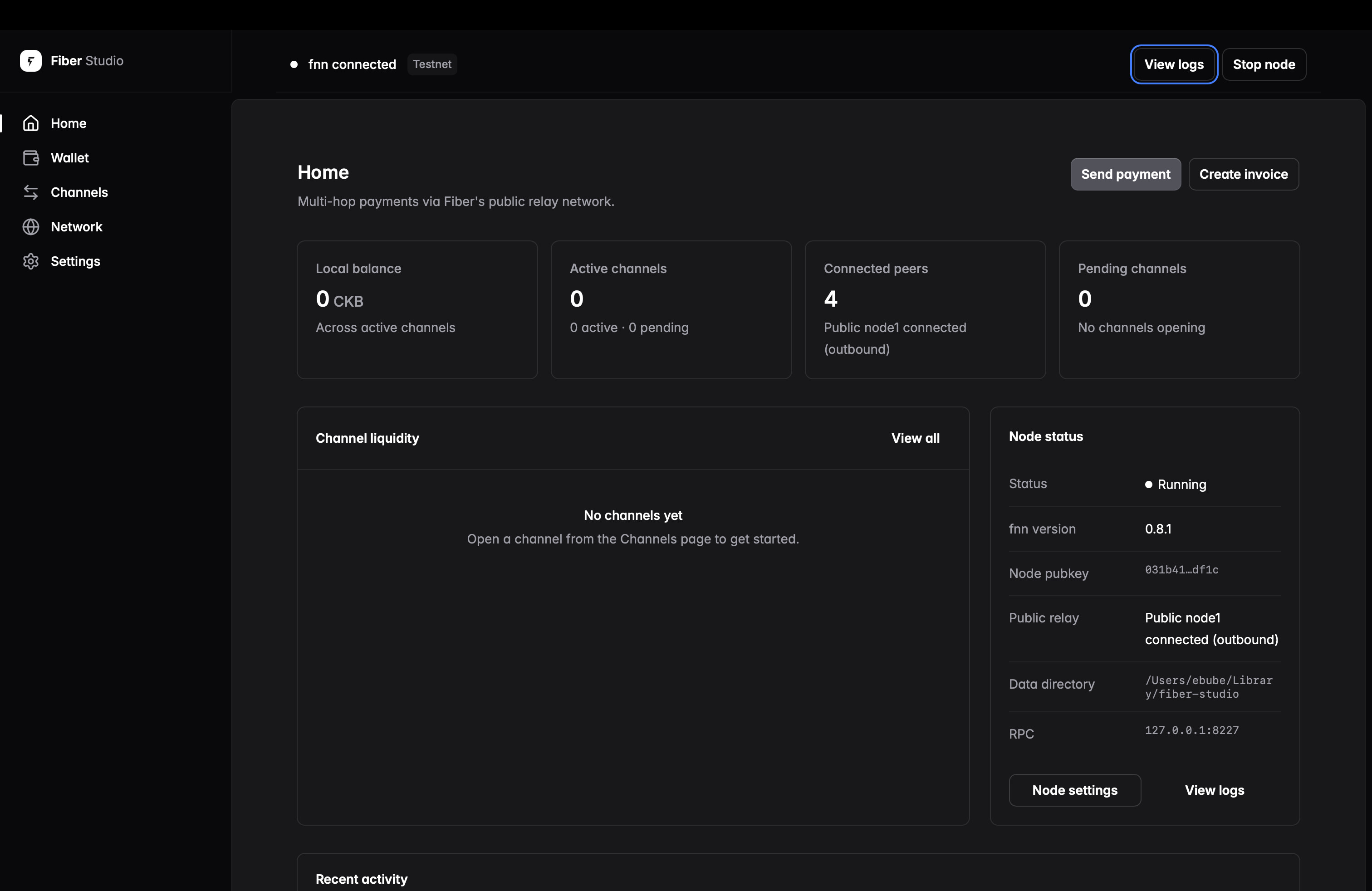
That prototype validated direction. It did not deliver the experience Fiber deserves. The UI was built to prove integration with official fnn works. The navigation is engineer-centric. Many essential flows still require too much context.
This grant funds the real build — a ground-up UX redesign, a new product brand, and the feature set users are already asking for.
Grant Amount Requested: $6,000 USD (CKB equivalent at disbursement)
ETA to Completion: 3 months from grant approval (target: August 2026)
CKB Wallet or Funding Address: To be provided
3. Project Introduction
What problem are we solving?
Fiber is CKB’s peer-to-peer payment and swap layer — channels, routing, invoices, fast off-chain value movement. To use it, you run **fnn**, the official Fiber Network Node: a background process that holds keys, connects to peers, opens channels, and settles payments.
For most people, that today means:
- A VPS or always-on server — or deep comfort with self-hosting
- A long CLI and JSON-RPC checklist — binary, paths, config, keys, peers, channels, invoices
- Operational risk — upgrades can lose channel data; misconfigured RPC exposes the node
The filter is too high. CKB’s Fiber layer cannot reach everyday users, educators, or app builders if running a node feels like a part-time sysadmin job.
What the prototype proved (and what it did not)
The current Fiber Desktop repository demonstrates three things:
- Demand is real — people want to run Fiber on a laptop, not rent infrastructure first
- Official fnn wrapping works — Tauri can spawn the real node, proxy RPC, and keep keys local
- The UX gap is known — community comments, forum replies, and issue reports map directly to what v1 must fix
It does not demonstrate a finished product. It was intentionally scoped as a learning and validation release — enough to ship, get feedback, and confirm we are building the right thing.
Rebrand (why not keep “Fiber Desktop”?)
“Fiber Desktop” served well as a working title for the prototype and Nervos Talk thread. For v1, the product needs a dedicated brand — memorable name, logo, domain, and consistent identity across the app, installers, and website. The new brand will still be clear that it wraps the official fnn node on CKB/Fiber; it is a product identity change, not a protocol fork.
| Prototype (now) | v1 launch (M3) |
|---|---|
| “Fiber Desktop” working name | New product brand (name + visual identity) |
| fiber-desktop.vercel.app | Custom domain matching the brand |
| Generic / engineer-centric UI | Branded app shell, icons, and marketing site |
Product–market fit & demand
| Signal | What it tells us |
|---|---|
| Nervos Talk thread (19+ likes, active replies) | Ecosystem wants accessible Fiber tooling |
| “I had the same thought about a desktop app for Fiber” — ecosystem contributor | Problem is widely felt, not niche |
| Users completing guided setup & first payments | Core value proposition resonates |
| Recurring friction themes (keys, downloads, navigation, Windows, channel states) | Clear, actionable v1 roadmap |
| Other CKB apps (wallets, games) needing users on Fiber | Infrastructure UX benefits whole ecosystem |
| Audience | Need | Fiber Desktop v1 delivers |
|---|---|---|
| New Fiber users | Try testnet without terminal fluency | Guided flows, one-click relays, wallet-style send/receive |
| CKB holders | Self-custodied node on hardware they own | Official fnn, OS keychain, no hosted wallet |
| Ecosystem builders | More nodes and liquidity on the mesh | Lower barrier → more peers, channels, routed payments |
| Educators | Teach Fiber in workshops and demos | Polished app + website guides, not live CLI |
Fiber Desktop does not replace fnn or fork the protocol. It is the human interface for the official node — the missing layer between Fiber’s power and normal users.
Why now?
- Validation is done. We are not asking the DAO to fund an idea on a slide deck. Users have tried the prototype, commented, and pointed at the gaps. Funding now goes toward execution with certainty of direction.
- Fiber is moving. [fnn releases](https://github.com/nervosnetwork/fiber/releases) are active; testnet and mainnet usage are growing. The window to onboard non-CLI users is now, before Fiber becomes power-user-only by default.
- The builder is proven on CKB. backr, ckeeper, cellbet,and Fiber Desktop prototype show sustained Nervos ecosystem commitment — not a one-off experiment.
- A ground-up rebuild is cheaper than patching forever. Community feedback showed the MVP structure will not scale. Rebuilding IA, design system, and core flows in one focused sprint is the responsible path to v1.
4. Team & Roles
Chukwuma Ebube (@chukwuma619 · ebube.dev)
Software Engineer with over 5yrs experience in building apps and mobile applications. Active on CKB: Fiber Desktop, backr, ckeeper (Telegram wallet), cellbet (CKB betting). Also contributed to Castora (Web3 prediction pools) and many others.
5. Current Status
Phase 1 complete: proof of demand (prototype)
The open-source prototype established technical feasibility and community pull. It is evidence for this grant, not the deliverable.
| What we proved | How |
|---|---|
| Users want this | Nervos Talk engagement, repeat setup attempts, positive ecosystem replies |
| Official fnn integration works | Sidecar spawn, RPC proxy, keychain, config sync, CI releases |
| We know what to build next | Forum feedback + issues → prioritized v1 backlog |
Prototype capabilities (will be reimplemented in v1 UX):
- Tauri 2 + React; macOS / Windows / Linux builds
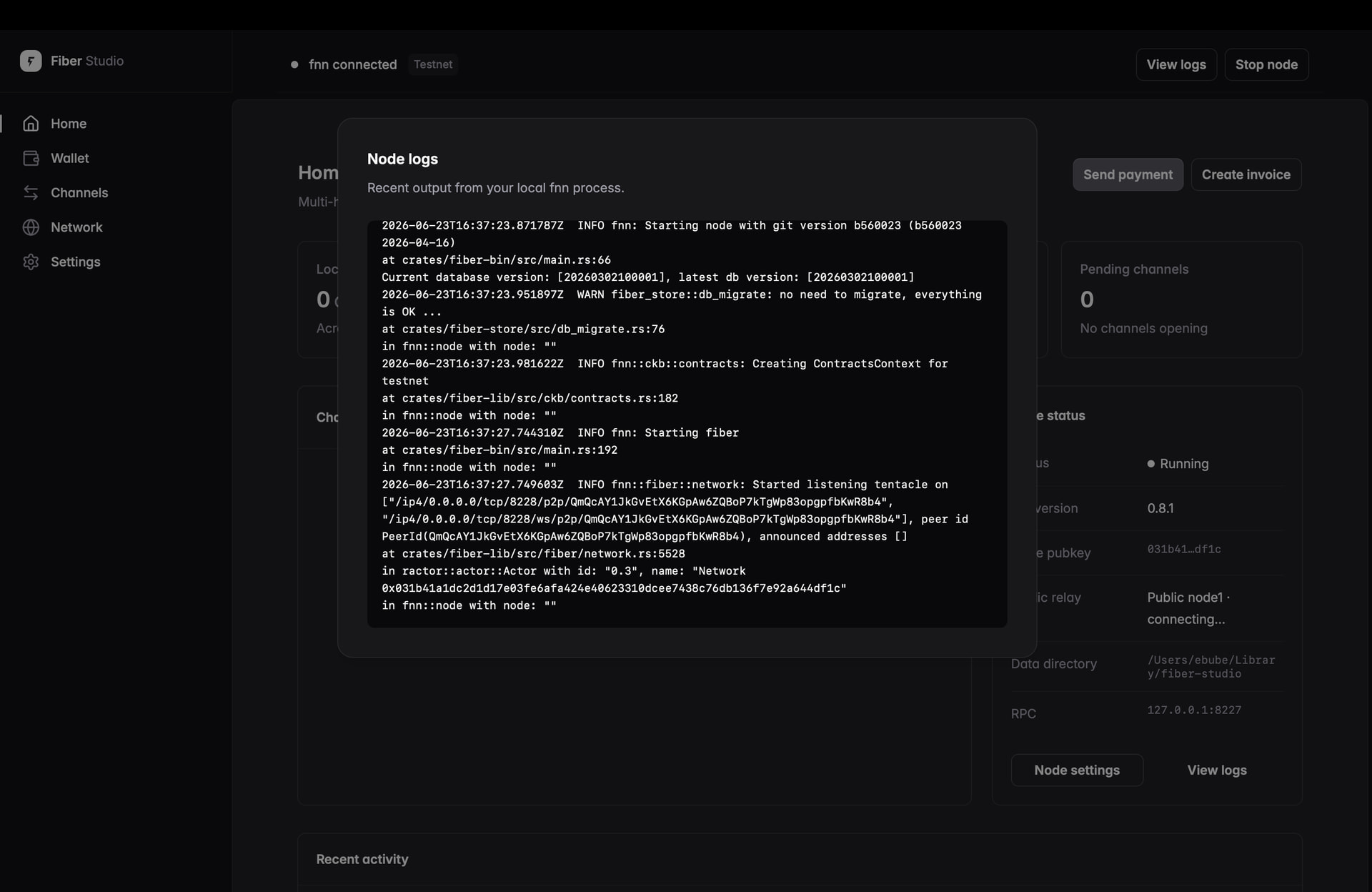
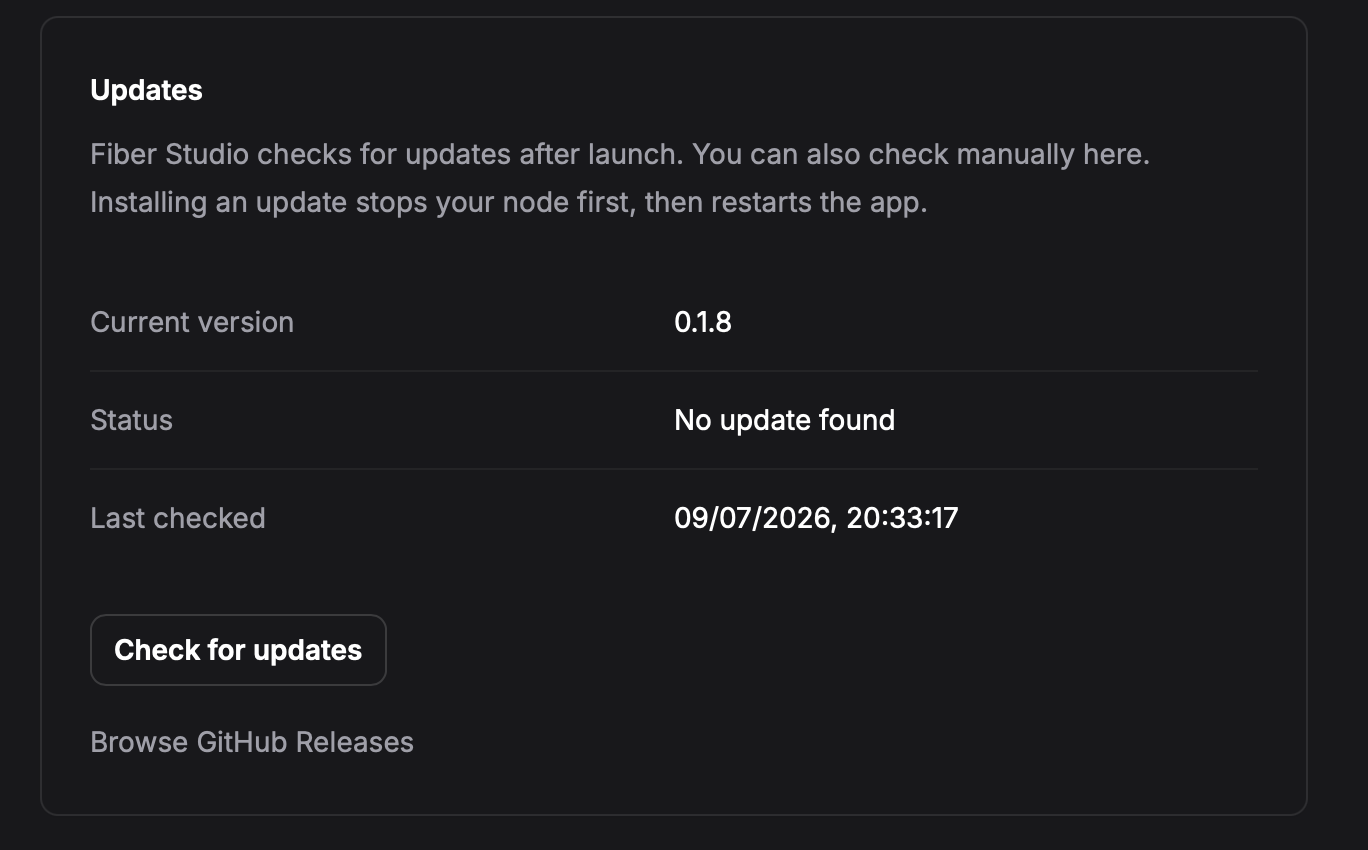
- Guided setup, node start/stop, logs, orphan process recovery
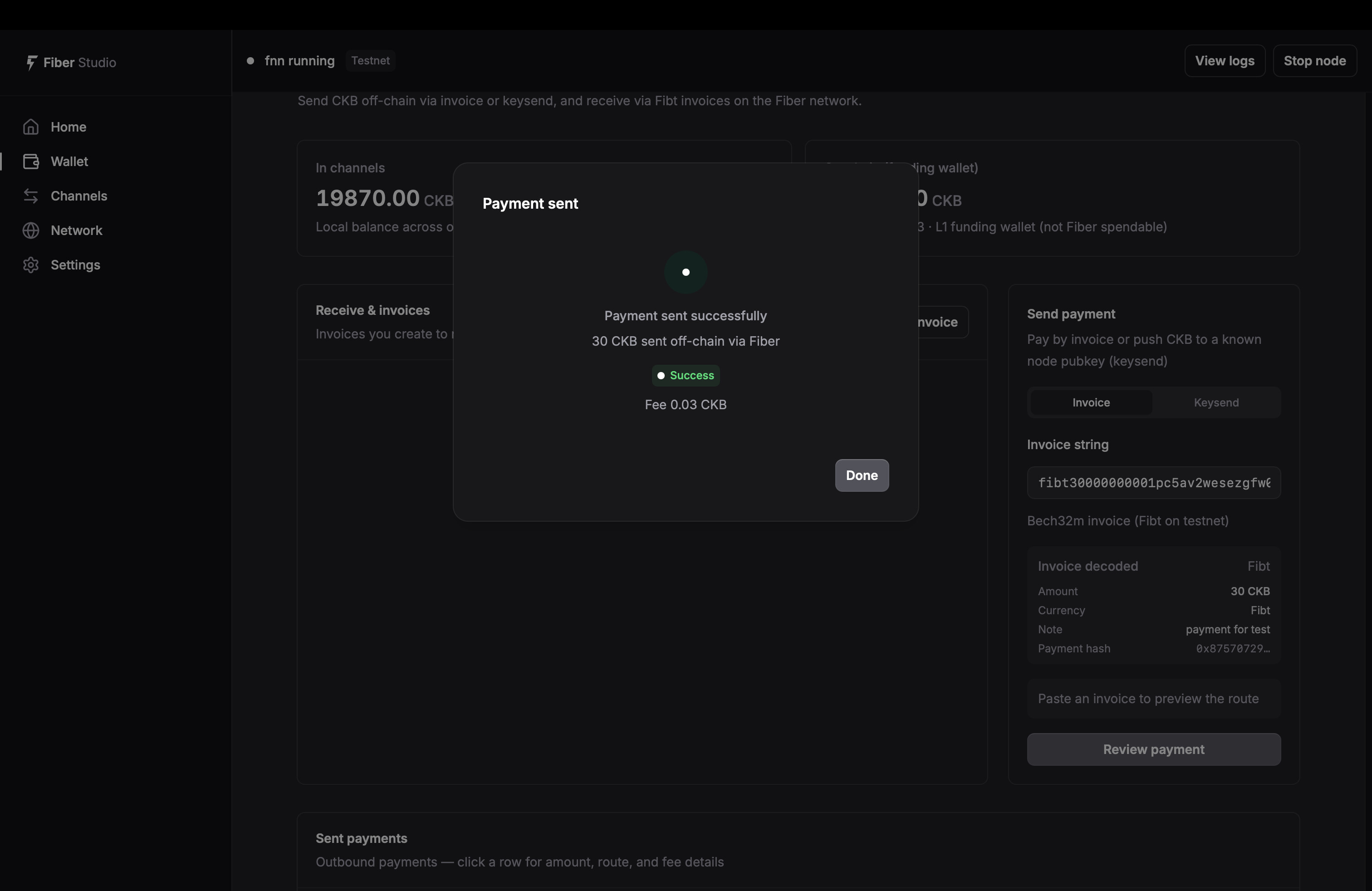
- Basic channel, send, receive, and network RPC panels
- Marketing site + guides at fiber-desktop.vercel.app (prototype — free Vercel subdomain; replaced by a purchased custom domain in v1)
- MIT license, public GitHub, release pipeline
Links:
- Source (prototype): https://github.com/chukwuma619/fiber-desktop
- Community validation: https://talk.nervos.org/t/fiber-desktop-run-fiber-fnn-on-your-laptop-without-the-public-node-headache/10247
- Upstream node: https://github.com/nervosnetwork/fiber
Phase 2: what this grant builds (v1)
The v1 rebuild replaces engineer-centric screens with a consumer-grade product:
| Pillar | v1 outcome |
|---|---|
| New product brand | Dedicated name, logo, and identity — replaces “Fiber Desktop” working title at v1 launch (M3) |
| Ground-up UX | New navigation and screens built feature-by-feature in M1–M2 — not a separate design-only phase |
| Task-based flows | Home → Wallet → Channels → Network → Node → Settings (not “figure out which tab”) |
| Features users already asked for | Health dashboard, peer management, payment history, human-readable amounts, invoice QR, in-app invoice tracking, network graph explorer, auto-start & tray, upgrade safety |
| Production quality | Testing across all platforms, error playbooks (M1–M2); rebrand + signed distribution + website on custom domain (M3 launch) |
6. Application Design
6.1 Functional Overview
Target user journey (v1):
flowchart LR
A[Download app] --> B[Guided first-run]
B --> C[Node running locally]
C --> D[Join network via relays]
D --> E[Open & monitor channels]
E --> F[Send & receive payments]
F --> G[Stay healthy & upgrade safely]
- Install — One download; official fnn bundled or fetched automatically
- Onboard — Wizard: network, folders, key, password — with validation at every step
- Operate — Dashboard shows status, liquidity, and “what to do next”
- Participate — Connect peers, browse the network graph, open channels, pay and receive without JSON-RPC literacy
- Maintain — Safe upgrades, clear logs, recovery from common failures; optional auto-start and tray so the node keeps running in the background
On-chain vs off-chain:
| Layer | Role |
|---|---|
| CKB L1 | Channel funding/closing, on-chain settlement — via official fnn |
| Fiber / FNN | Channels, routing, invoices, payments — via fnn JSON-RPC |
| v1 app (new brand at launch) | Local orchestration, UX, secrets in OS keychain — no hosted backend, no new scripts |
6.2 Architecture & Design
v1 architecture — reuse validated shell; rebuild UI layer from scratch:
┌───────────────────────────────────────────────────────┐
│ Home · Wallet · Channels · Network · Node · Settings │
└────────────────────────┬──────────────────────────────┘
│ Tauri IPC (retained & extended)
┌────────────────────────▼──────────────────────────────┐
│ Rust shell (Tauri 2) — proven in prototype │
│ fnn process · keychain · config · RPC proxy · upgrades │
│ · auto-start · system tray │
└────────────────────────┬──────────────────────────────┘
│
┌────────────────────────▼──────────────────────────────┐
│ fnn (official Fiber Network Node) │
└────────────────────────┬──────────────────────────────┘
│
┌────────────────────────▼──────────────────────────────┐
│ Nervos CKB │
└───────────────────────────────────────────────────────┘
Open source: MIT license; all grant work merges to public GitHub with tagged releases.
6.3 Design Rationale
| Decision | Why |
|---|---|
| Ground-up UX rebuild | Prototype validated demand; patching UI incrementally would ship the wrong IA |
| Keep official fnn | Security, compatibility, trust — same node as CLI users |
| Local-first | Aligns with CKB self-custody; no custodial shortcut |
| Community-informed backlog | Features prioritized from Talk feedback and real user friction |
| No custom L1 scripts | Infrastructure UX, not a new financial primitive — focused scope |
6.4 Fee Model and Sustainability
Free, open source, no app fees. Ecosystem value = more Fiber nodes, channels, and CKB L2 activity. Post-v1 maintenance via OSS releases and optional follow-up grants — not DAO dependency for basic updates.
7. Key Benefits for CKB
| Benefit | Concrete impact |
|---|---|
| Fiber adoption | Non-CLI users run official nodes on laptops they already own |
| Network growth | More peers, channels, routed payments on CKB’s Fiber layer |
| Reduced support burden | Fewer “how do I run fnn?” threads; self-serve onboarding |
| Developer reference | Open-source patterns for Fiber RPC integration in wallets and apps |
| Ecosystem composability | ckeeper, cellbet, future dApps benefit from users who can operate Fiber |
| Credible OSS story | Official fnn, MIT license, community-built — not a black-box wallet |
8. Detailed Deliverables & Milestones
The funding covers 3 months of focused delivery across three milestones. An initial $1,500 down payment (25% of grant) is received at the commencement of the grant.
Delivery model:
| Milestones | Focus |
|---|---|
| M1 – M2 | Build the app — ship working features with a ground-up UI/UX redesign in two monthly increments; unsigned dev builds on GitHub after each milestone |
| M3 | Finish, launch — operations & cross-platform testing, rebrand, website, custom domain, app signing, internal security review, v1.0.0, DAO completion report |
Milestone 1: App — Shell, Dashboard & Node (Month 1) — 25% of grant
Build:
- Replace prototype UI with new app shell and navigation: Home · Wallet · Channels · Network · Node · Settings
- Home dashboard — live node health, channel summary, “what to do next”
- Node & setup — guided first-run flow; start/stop; status; logs entry point
- Retain and extend validated Rust shell (fnn lifecycle, keychain, config, RPC proxy)
Development builds (testers only):
- v0.2.0 / v0.3.0 — unsigned dev builds on GitHub Releases via existing CI (for Nervos Talk testers)
Verification:
- Fresh install → guided setup → node running locally on testnet
- Dashboard reflects live RPC state (node_info, channel counts)
Releases: v0.2.0 (Week 2), v0.3.0 (Week 4)
Milestone 2: App — Wallet, Peers & Channels (Month 2) — 25% of grant
Build:
- Wallet tab — merged Send + Receive; human-readable CKB amounts; invoice QR codes
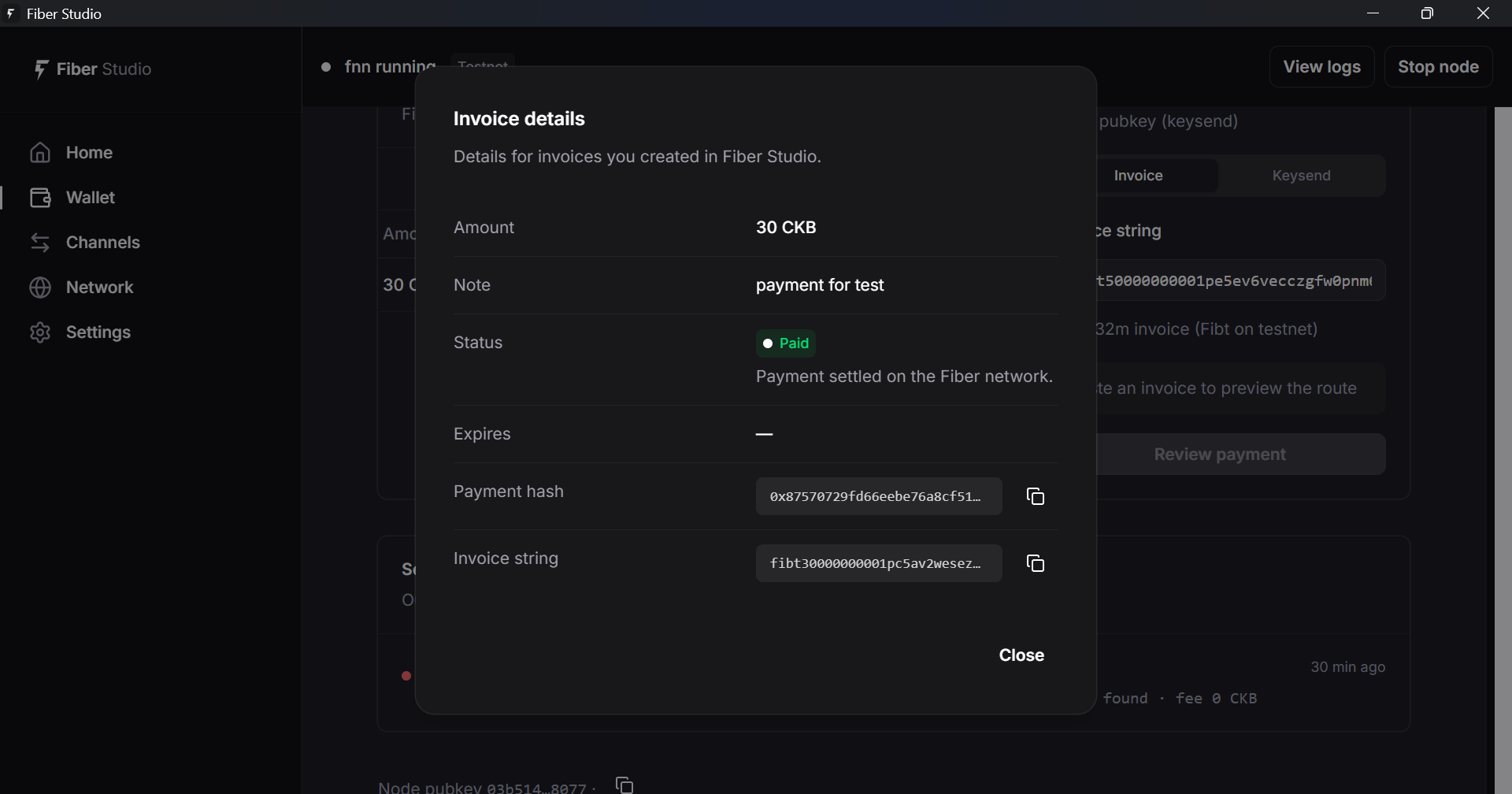
- Invoice management — track and manage invoices created in the app; inspect status and cancel unpaid ones via get_invoice and cancel_invoice (fnn has no list_invoices — the app keeps payment hashes locally)
- Peer management — list_peers, one-click connect to documented public relays
- Channels tab — open, list, and monitor channels; clear pending → ready states
- Network tab — connect flow surfaced for first-time users (not buried in setup)
- Network graph explorer — browse mesh topology via graph_nodes and graph_channels (lightweight view, not a block explorer)
Development builds (testers only):
- v0.4.0 / v0.5.0 — unsigned dev builds on GitHub Releases; release notes on GitHub
Verification:
- End-to-end testnet flow: setup → connect relay → open channel → send/receive payment
- Create receive invoice → appears in app invoice list → inspect or cancel if unpaid
- Network tab loads graph nodes/channels without raw JSON-RPC
- Regression check against official fnn RPC (no protocol fork)
Releases: v0.4.0 (Week 6), v0.5.0 (Week 8)
Milestone 3: Launch — Operations, Rebrand & v1.0.0 (Month 3) — 25% of grant
Build (app — finish remaining features):
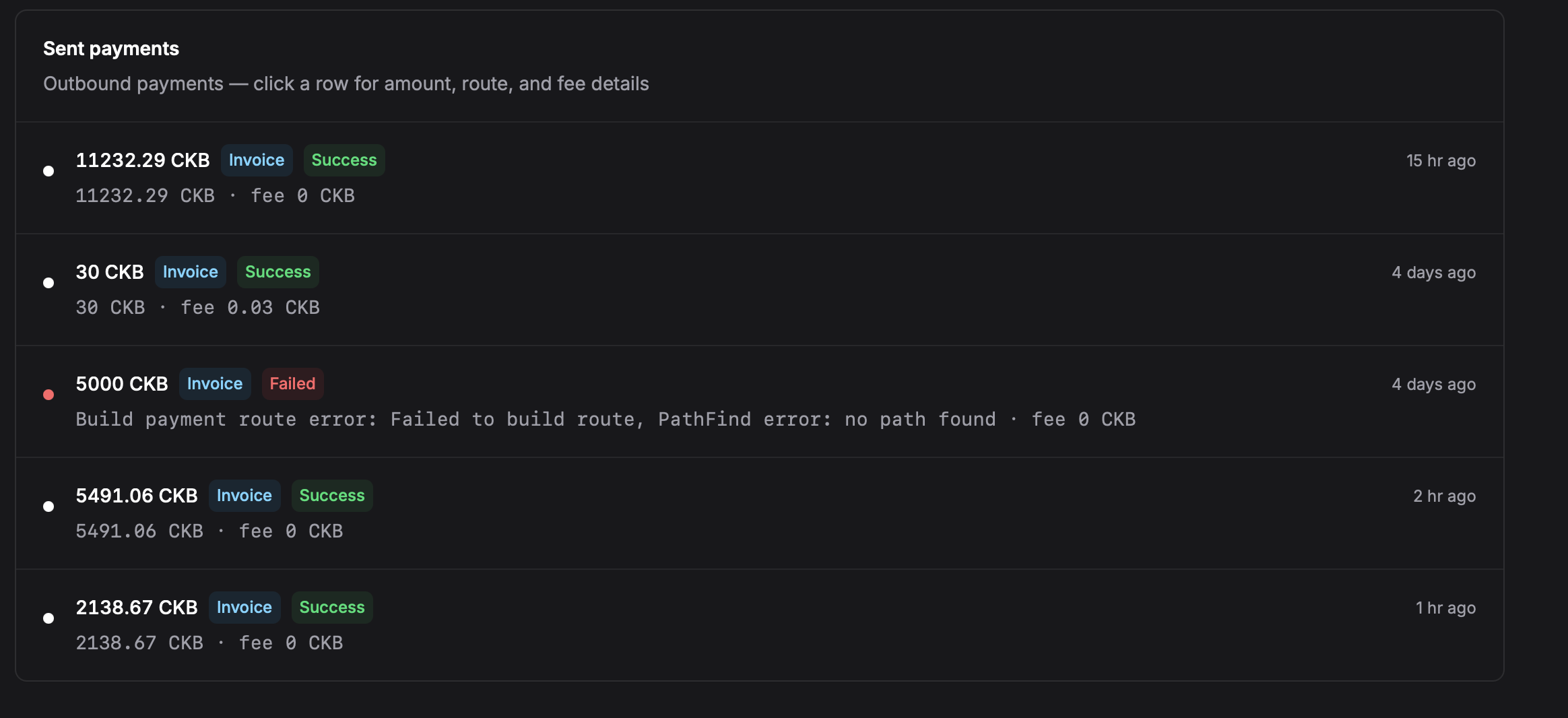
- Payment history — list_payments with status (pending / succeeded / failed)
- fnn upgrade wizard — version check, “close channels first” gate, download + fnn-migrate guidance
- parse_invoice confirmation before send — amount and recipient preview
- Log export and expanded in-app error playbooks (lock file, wrong password, no route)
- Auto-start & system tray — optional start node on app launch; minimize to tray; warn before quit while node is running (macOS, Windows, Linux)
- Testing across all platforms (macOS, Windows, Linux)
Launch (rebrand & public release):
- Select final product name and visual identity; apply across app, installers, and website
- Ground-up website under the new brand — landing, download page (OS-aware installers), user guides, FAQ from M1–M2 testers
- Purchase custom domain (~$15–40/yr); deploy on Vercel; redirect fiber-desktop.vercel.app
- App signing — Apple Developer ID + notarization; Windows Authenticode; Linux bundles (.AppImage, .deb, .rpm)
- Internal security review — RPC defaults (localhost-only), keychain usage, signing pipeline integrity
- v1.0.0 Final on GitHub Releases; fresh macOS and Windows install tested from custom-domain download page
- Nervos Talk v1.0.0 announcement and DAO completion report
Development builds (testers only):
- v0.6.0 — unsigned dev build mid-month (macOS, Windows, Linux via CI)
- v0.7.0 — release candidate if needed before v1.0.0
Verification:
- Upgrade path tested on pinned fnn version bump
- Failure-state handling (node crash, RPC unreachable, interrupted download)
- Auto-start and tray behavior verified on all three platforms
- End-to-end testnet flow still passes after rebrand and signing
Releases: v0.6.0 (Week 9), v1.0.0 Final (Week 12, signed + website live)
Post-Grant Maintenance Schedule
Following the v1.0.0 final release, a 3-month stabilization period is included at no additional cost to ensure production stability:
- All bug fixes related to features delivered in Milestones 1–3
- Address non-critical bugs and edge cases discovered during wider adoption
- Performance optimization based on real-world usage patterns
- Security patches as necessary (including upstream fnn pin updates)
- Urgent cross-platform compatibility fixes (macOS, Windows, Linux)
- User support via GitHub issues and Nervos Talk
- Emergency hotfixes for critical issues
- Preparation of handoff documentation for long-term maintenance
- End-of-grant report with stability metrics and recommendations
9. Budget Breakdown
Total Request: $6,000 USD (payable in CKB)
| Milestone | Amount |
|---|---|
| Grant Commencement | $1,500 |
| Milestone 1: App — Shell, Dashboard & Node | $1,500 |
| Milestone 2: App — Wallet, Peers & Channels | $1,500 |
| Milestone 3: Launch — Operations, Rebrand & v1.0.0 | $1,500 |
| Total | $6,000 |
Included in the milestone amounts above (not extra line items):
| Item | Est. cost | Covered in |
|---|---|---|
| Apple Developer Program (signing + notarization) | ~$99/yr | M3 — enrolled and wired into CI before v1.0.0 |
| Windows Authenticode certificate | ~$200–400/yr | M3 — purchased and wired into CI before v1.0.0 |
| Custom domain (1 yr registration) | ~$15–40 | M3 — purchased with website launch |
| Vercel hosting (site + download page) | Free tier | M3 launch on custom domain |
| GitHub Actions CI (release matrix) | Existing OSS workflow | Dev builds M1–M2; signed release M3 |
10. Out-of-Scope / Future Funding Needs
| Not in this grant | Notes |
|---|---|
| New feature development beyond v1 scope | Post-v1 enhancements require separate funding |
| Major architectural changes | v1 rebuild is the scoped architecture deliverable |
| Fiber protocol / fnn core changes | Upstream nervosnetwork/fiber |
| Integration with new CKB/Fiber protocol features (CCH, watchtower, UDT power tools) | See Appendix A — future funding |
| Custodial or hosted wallet services | Local-first, official fnn only — no hosted backend |
| Third-party security audit | Recommended beyond M3 internal review |
| Domain renewal after the first year | Annual registration ~$15–40; hosting remains on Vercel free tier unless traffic requires upgrade |
| Ongoing salary after stabilization | OSS maintenance + optional follow-up grants |
11. Risk & Mitigation
| Risk | Mitigation |
|---|---|
| “Why fund a rebuild?” | Prototype de-risked demand; rebuilding UX is cheaper than years of incremental patchwork — community feedback proves the MVP IA is wrong for target users |
| **fnn breaking changes** | Pinned versions; upgrade wizard; official migration docs |
| Solo developer delivery | Milestones are sequential, scoped, and publicly verifiable |
| Windows/Linux gaps | Cross-platform testing completed in M3 before v1.0.0 launch; CI builds all platforms |
| Users confuse liquidity vs bugs | In-app education on channels/inbound capacity |
| Signing / distribution compressed into M3 | Apple enrollment and Windows cert procured early in Month 3; v0.6.0 beta in Week 9; v1.0.0 signed launch Week 12 |
| Low post-launch adoption | Single M3 launch: new brand, custom domain + signed installers + website that tells the full story |
12. Closing / Call to Action
The Fiber Desktop prototype did its job: it proved CKB users want this, showed official fnn wrapping works, and collected the feedback to build the right product.
This grant is not maintenance on a demo. It is the build that makes Fiber accessible on everyday hardware.
I am asking the CKB Community Fund DAO to fund three months of focused execution — build the app in M1–M2, then launch in M3 under a new product brand: website, domain, signing, security review, and v1.0.0.
Thank you for your consideration.