在水木社区随机逛了一下,直观感受是和其它浮躁的平台没什么两样,大概跟以前不是一个样子。
关于站规的部分,在互联网还相对纯真的年代留下来的经验,我不确定在现在还有多少是能提供参考价值的。毕竟我们现在面对的已经是不同的一批人了。
虽然这么说,我确信完全的匿名版只能存在于我的幻想里,至少在目前的社区是如此。光是想想要怎么建立认真阅读的文化,以及这种方式带来的门槛,我就已经开始头疼了。
在水木社区随机逛了一下,直观感受是和其它浮躁的平台没什么两样,大概跟以前不是一个样子。
关于站规的部分,在互联网还相对纯真的年代留下来的经验,我不确定在现在还有多少是能提供参考价值的。毕竟我们现在面对的已经是不同的一批人了。
虽然这么说,我确信完全的匿名版只能存在于我的幻想里,至少在目前的社区是如此。光是想想要怎么建立认真阅读的文化,以及这种方式带来的门槛,我就已经开始头疼了。
Telnet的时代还是很纯真的,那时候也没什么KYC制度,积累声望就是匿名论坛最好的信誉,大家都希望积累声望。猫扑还有猫扑币。现在说个话就可能被请喝茶了,哎。
匿名BBS突然让我想起了,IRS和纪委的匿名举报制度。跟钱/权相关的真的治理,反而用匿名;而威权相关的高压治理,都是实名的。
 Update / 更新日志 (2025-12-30-2)
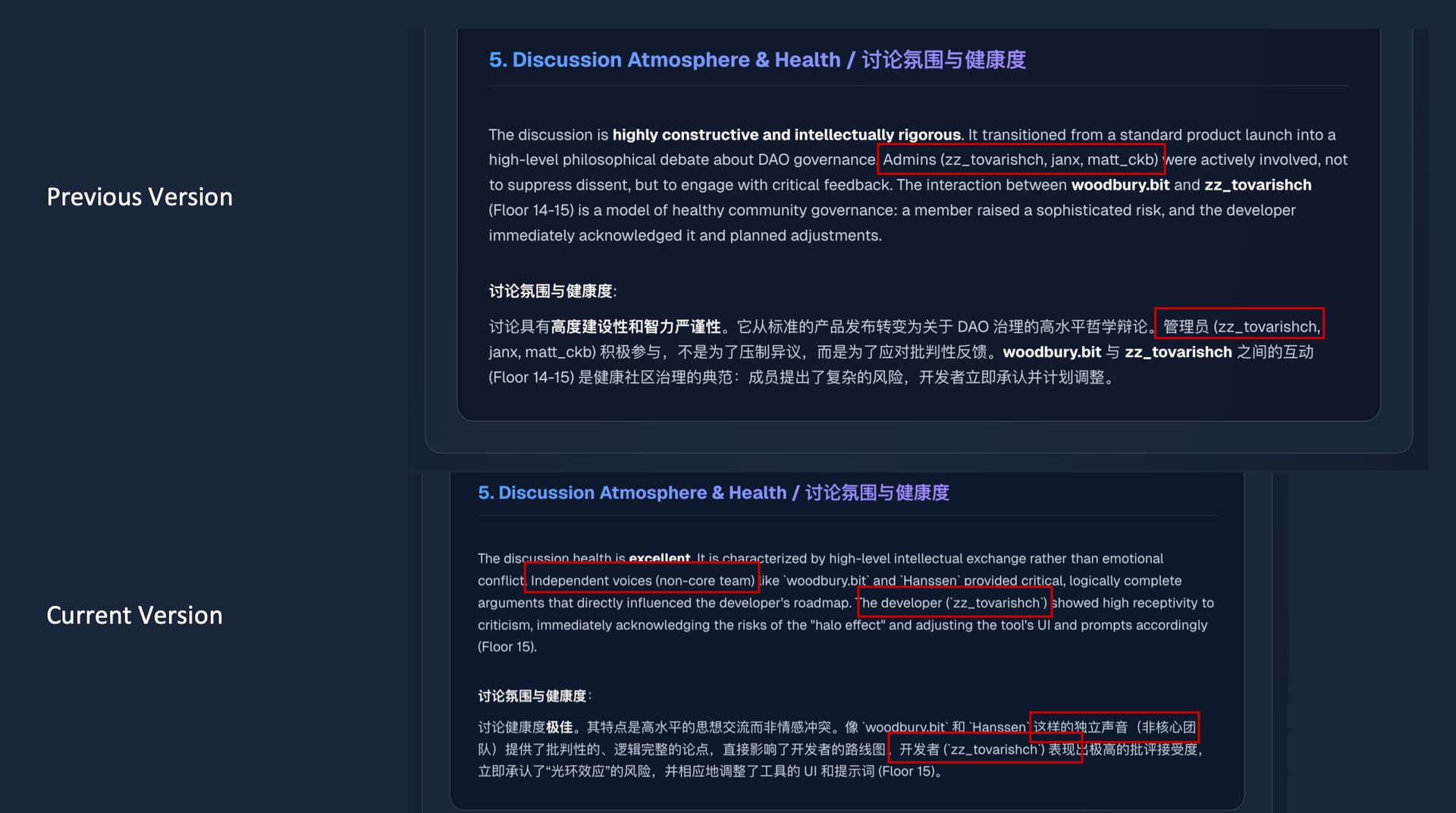
 Bias-Resistant AI Logic: The AI engine has been re-engineered with a strict “Identity Blindness” protocol.
Argument > Identity: The AI is explicitly instructed to evaluate the logic and evidence of an argument while ignoring the speaker’s title.
Role Scoping: Titles are invisible during debate analysis. The AI will refer to a user as “Admin/Mod” ONLY when they perform specific moderation duties (e.g., issuing warnings).
Hidden Treasure: Algorithms now actively scan for high-quality, logical arguments from low-LV or new users to ensure independent voices are heard.
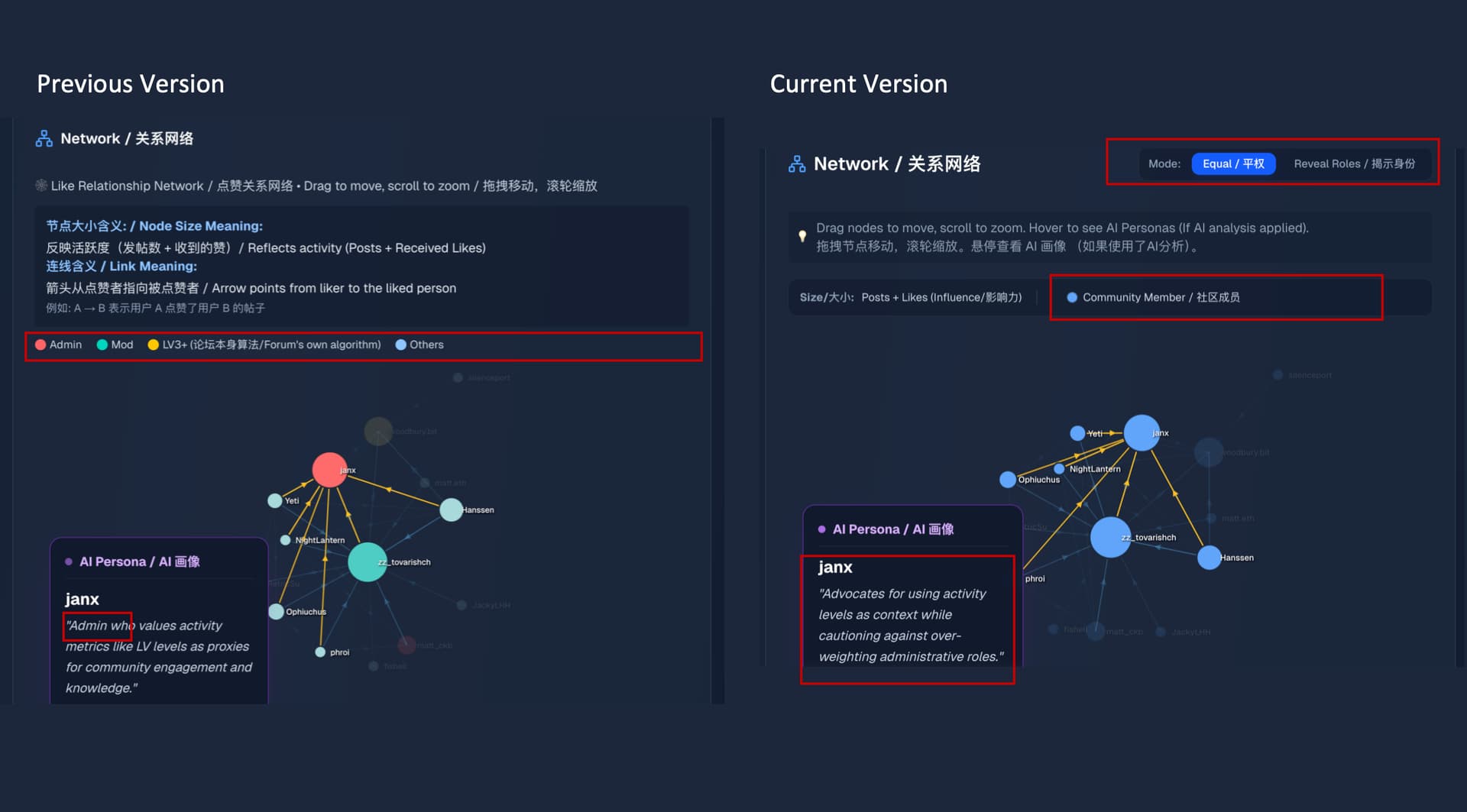
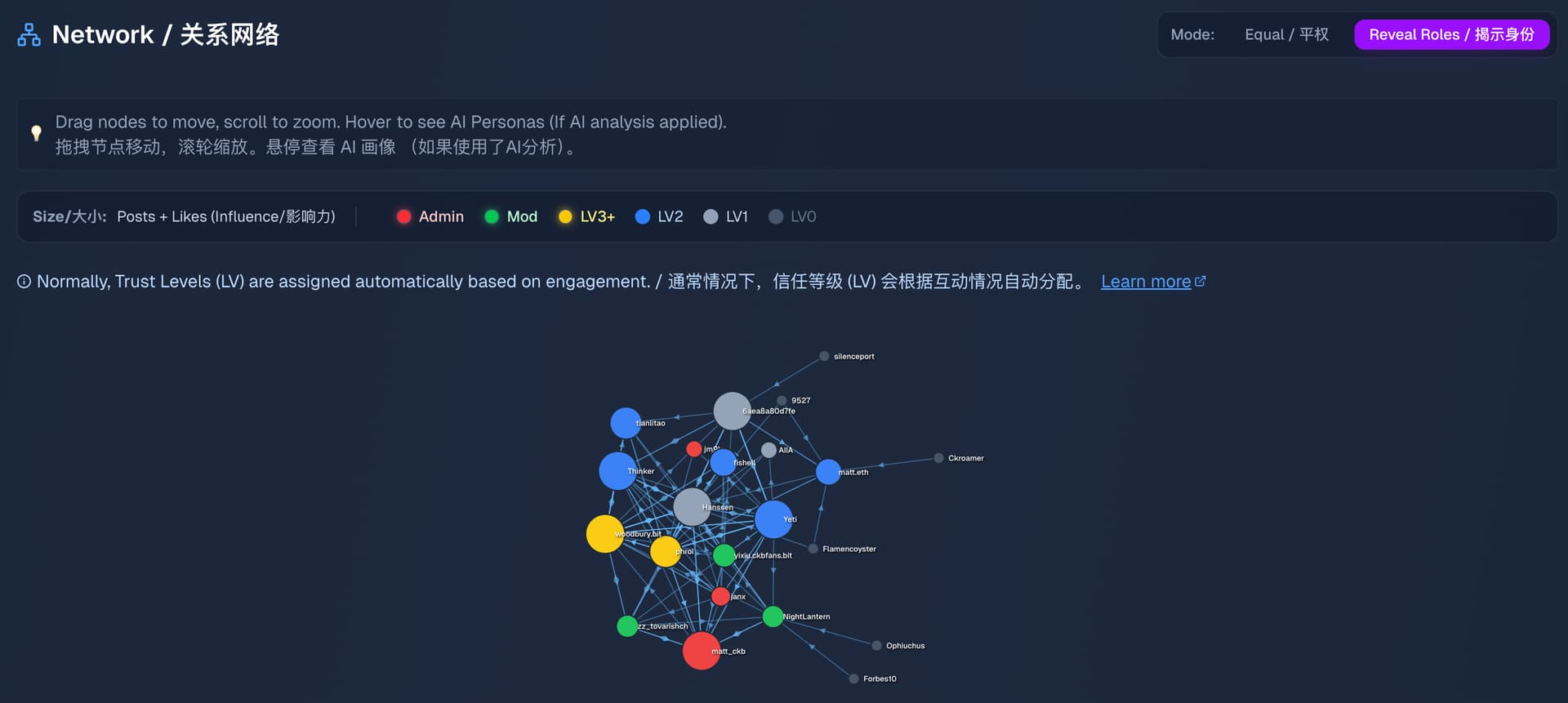
 The “Equality First” Social Graph: We’ve redesigned the Network Graph to prioritize Contribution Volume over Titles.
Default View (Equal Mode): All nodes are rendered in a unified blue palette. Admin/Mod/LV labels are hidden by default to prevent the “Halo Effect.”
Reveal Toggle: A new “Reveal Roles” switch allows you to overlay the administrative structure (Red for Admins, Green for Mods) only when you explicitly need to analyze authority distribution.
抗偏见 AI 逻辑:AI 引擎已根据严格的身份协议进行了重新设计。
论点 > 身份:AI 被明确指示评估论点的逻辑和证据,而忽略发言者的头衔。
角色范围:在辩论分析期间,头衔不可见。人工智能仅在用户履行特定管理职责(例如,发出警告)时才会称其为“管理员/版主”。
隐藏的宝藏:算法现在会主动扫描低等级用户或新用户发布的高质量、逻辑严密的论点,以确保独立的声音能够被听到。
“平权优先”社交图谱:我们重新设计了网络图谱,优先考虑贡献量而非头衔。
默认视图(平等模式):所有节点均以统一的蓝色调呈现。管理员/版主/LV 标签默认隐藏,以防止“光环效应”。
显示切换:新增的“显示角色”开关允许您仅在需要分析权限分布时才显示管理结构(管理员为红色,版主为绿色)。
 Design Thinking: Nudging Towards Rational Deliberation
 设计思维:通过交互设计助推理性审议
The Context / 背景
The above feedback regarding the “Halo Effect” of user levels and administrative roles has prompted a deep reflection on how HCI (Human-Computer Interaction) design influences governance outcomes.
上诉关于用户等级和管理身份可能带来“光环效应”的反馈,促使我们深刻反思:人机交互设计是如何潜移默化地影响治理结果的。
1. AI for Cognitive Decoupling
1. 用 AI 来进行认知解耦
The AI prompts were re-engineered to perform Cognitive Decoupling. The AI is instructed to treat the text as an anonymous logic puzzle. It weighs High-Value Signals (on-chain data, historical references) positively, while explicitly ignoring Authority Signals (titles) unless the Admin/Mod has conducted specific management actions. This ensures that a logical flaw from an Admin is critiqued, and a brilliant insight from a newcomer is highlighted.
AI 提示词被重构以执行认知解耦。AI 被指令将文本视为匿名的逻辑谜题,正向加权高价值信号(如链上数据、历史引用),并显式忽略权威信号(头衔),除非管理员执行了具体的维护操作。这确保了管理员的逻辑漏洞会被指出,而新人的精彩洞见会被高亮。
2. The Graph: Equal Mode VS Reveal Roles
2. 社交图谱:平权模式 VS 身份揭露
In behavioral economics, visible status markers (like ‘Admin’) predispose us to trust a speaker before reading their argument. To counter this, the Network Graph defaults to an ‘Equal Mode’. By visually stripping away hierarchy, we force the observer to judge influence based on actual engagement rather than assigned status.
Why keep the “Reveal Roles” toggle?
We retained the toggle not to reinforce authority, but to enable the Auditing of Power Structures. Transparency requires us to see if a discussion is being dominated by official roles or specific groups. Equal Mode promotes fair reading; Reveal Mode enables political oversight.
行为经济学指出,显眼的地位标记会让我们预设信任。为此,图谱默认为平权模式,在视觉上剥离科层制,强制观察者基于实际参与度来判断影响力。
为什么要保留“揭示身份”的开关?
我们保留开关并非为了强化权威,而是为了支持 “权力结构的审计”。透明度要求我们能够检视:一场讨论是否被官方角色或特定团体所主导。平权模式促进公平阅读,揭示模式则赋能政治监督。
3. Information Hierarchy and The Reputation
3. 信息层级和声誉
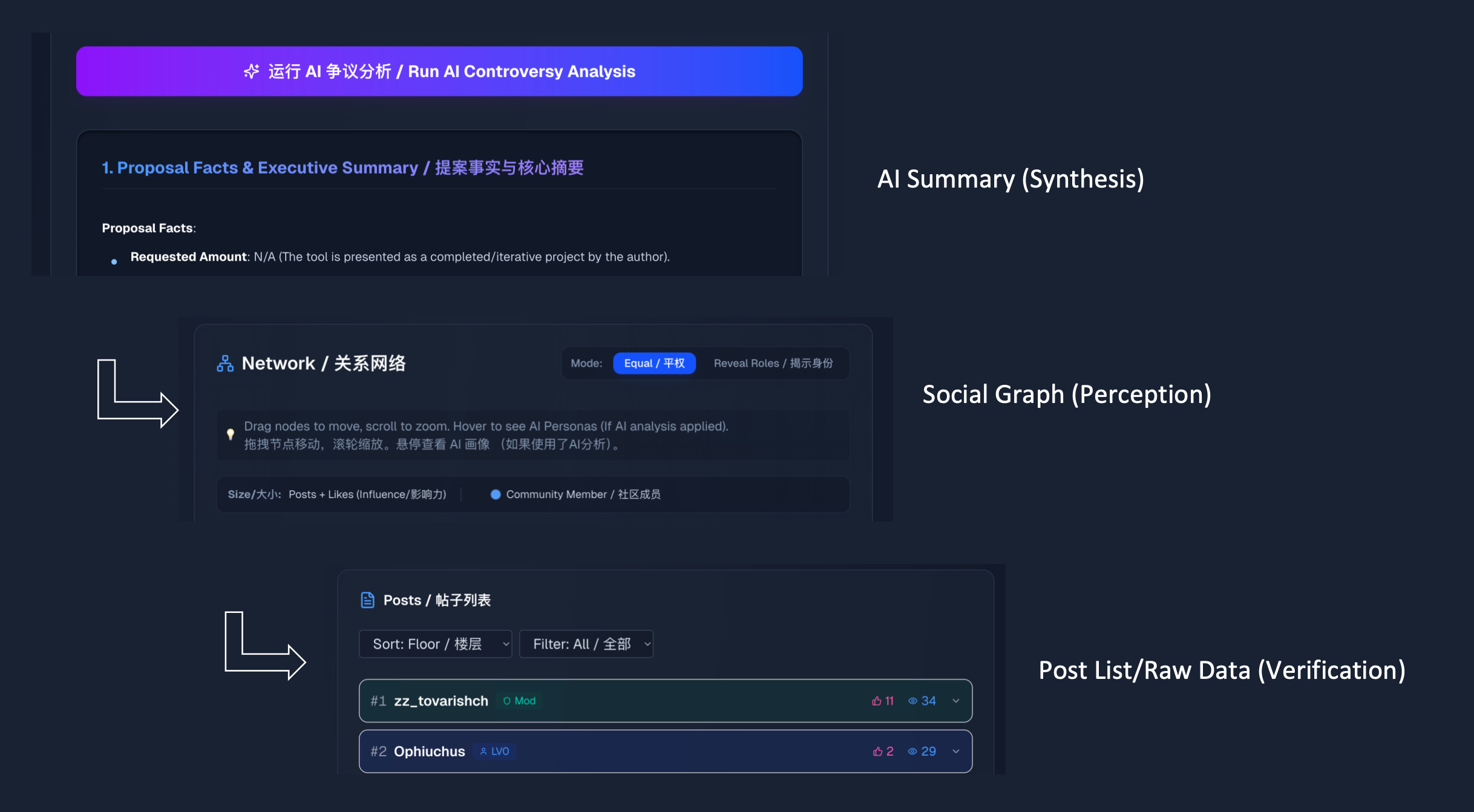
You may notice the vertical layout: AI Summary (Synthesis) → Social Graph (Perception) → Post List (Verification). This structure is intentional. We strictly preserve the Raw Post List at the bottom with all original labels (LV/Mod).
Reflecting on Reputation & Anonymity:
As community members (like @woodbury.bit) pointed out, centralized rating systems (LV) carry risks of bias and calcification. In true governance, anonymity often protects truth, while identity systems can sometimes suppress it (@Hanssen).
However, until a truly decentralized, censorship-resistant reputation protocol emerges, we cannot simply erase the current context (@janx). Instead, we move reputation from the ‘Heuristic Layer’ (first impression) to the ‘Verification Layer’ (detailed reading).
We hope this design balances the efficiency of signals with the fairness of anonymity, acknowledging that while our current tools are imperfect, our pursuit of rational governance continues.
大家可能会注意到页面的垂直布局:AI 总结 (综合) → 社交图谱 (感知) → 帖子列表 (验证)。这种结构将原始标签完整保留在底部。
关于声誉与匿名的反思:
正如社区成员 (like @woodbury.bit) 所指出的,中心化的评级系统(LV)存在偏见固化和“被盖章”的风险。在真正的治理中,匿名往往保护真相,而实名有时反而抑制表达(@Hanssen)。
然而,在去中心化且抗审查的声誉协议诞生之前,我们不能简单地抹除现有的语境信息(@janx)。相反,我们将声誉系统从 “启发式层”(第一印象)下沉到 “验证层”(深度阅读)。
我们希望这种设计能在“信号的效率”与“匿名的公平”之间找到平衡,承认现有工具的不完美,但我们在理性治理道路上的探索从未停止。
I figure this tool is not just an information aggregator; it is an experiment in Computational Social Science. Thanks to every practitioner.
我认为这个工具不只是信息聚合器,它更是一场计算社会科学的实验。感谢每一位实践者。
这个效率确实太高了,为你点赞 
我之前其实只是把自己的直觉想法说了一下,本身也不成熟。今天下午我还在反思,会不会是我当时的看法有点过于绝对,需要再调整。
例如,是否可以考虑用“技术能力信号”之类的维度,来替代或补充传统的 LV 活跃度信号;
或者在 DAO 场景中,引入类似 “技术专家组” 的机制。毕竟在预算提案这类问题上,技术专家的判断,客观上会比我这种水友的直觉判断更有参考价值。
传统工程项目里,每次招标也往往是从技术专家库中随机抽取评审成员参与评标。
在真正的去中心化系统中,“随机”并不是混乱,而是一种重要的公平手段,Jan在24年4月10日的讲话里面也说了这点。
总的来说,越来越感觉:
一个不依赖信任关系、而是依赖制度和信号的 DAO 治理,本身就非常困难。每个人都会不可避免地受到各种周边信号的影响,很多时候无法达成共识,无法达成共识,或许本身也是一种“公平的结果”,而不是系统失败。可能我们小时候的教育总是要达成共识,造成了长大以后的一些认知偏差。
感谢回复!也感谢您愿意花时间审视之前的直觉,瑞思拜!
关于你提到的引入“技术专家组”来辅助决策,这确实是一个直观的解法,但我对类似的机制有两个顾虑:
引入专家组很容易演变为“技术精英治国(Technocracy)”。从更底层的政治哲学逻辑来看,这触及了普选制与代议制/精英制在组织发展路径上的根本张力。一旦我们在制度上固化了“专家”的地位,可能会无意中形成新的权力中心。
专家的认定以及特定议题中评审的选择,很难完全去中心化。这让我想起之前在 NDAO-0001 Do not reveal progress of vote的讨论,我的一些观点:
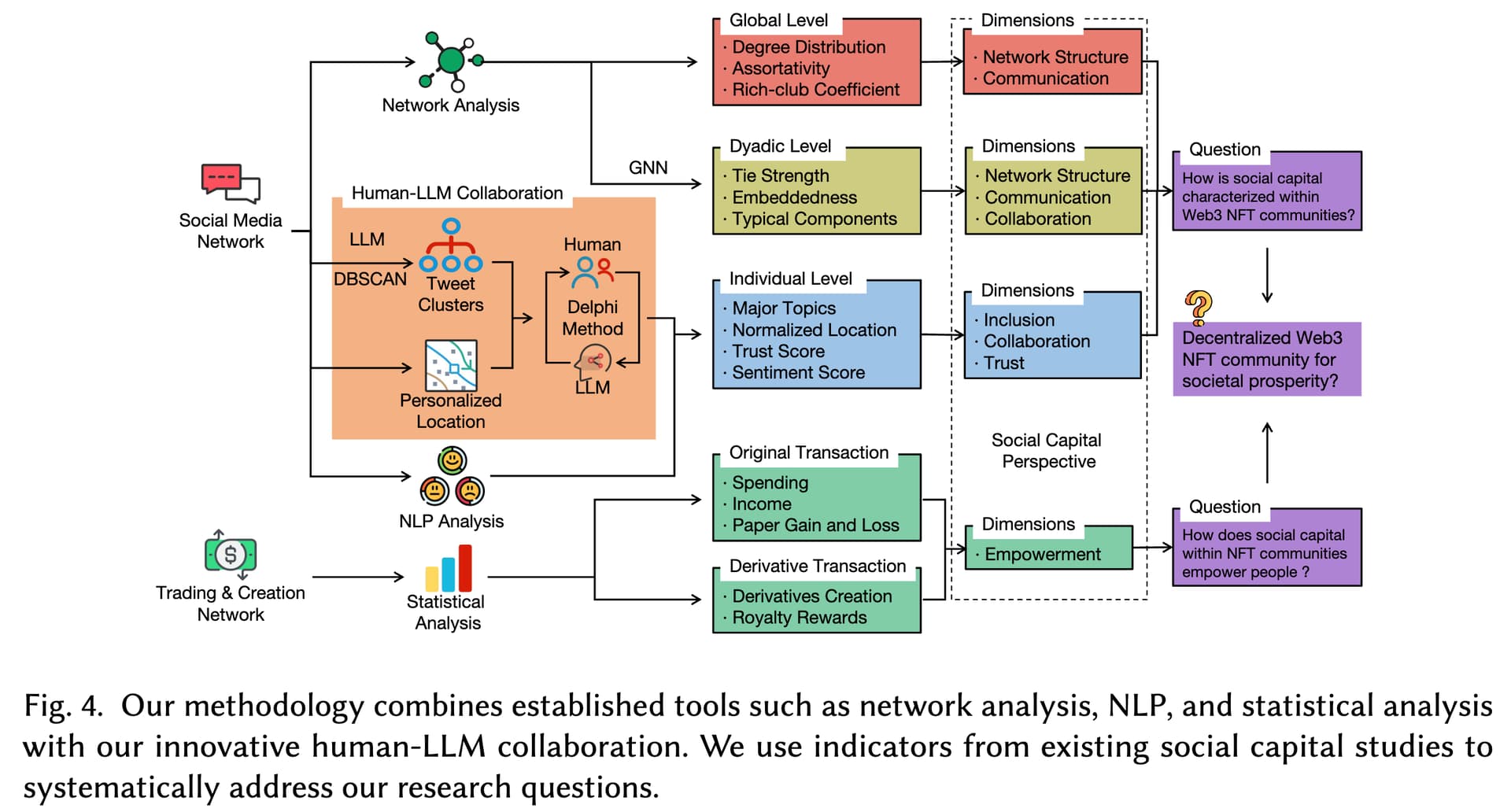
这也引出了核心难点:如何科学地构建声誉? 学术上,声誉通常被理解为实体过往贡献或未来潜力的一种代理指标 [1]。在今年 CSCW(社会计算和人机协作)的工作中 [2],我尝试引入 Social Capital(社会资本) 的视角,将其拆解为网络结构、协作、包容性、沟通、信任和赋能(Network structure, Collaboration, Inclusion, Communication, Trust, Empowerment)六个维度。 但在 DAO 中,去中心化地计算这些维度极具挑战。
AI 技术的出现,确实为量化那些难以分析的定性指标(如“包容性”)提供了新工具。那篇工作我把传统定量方法(统计、网络结构)与 Human-LLM Collaboration 结合,尝试进行更复杂的指标量化。但从量化维度指标,到可信的、动态的、量化的声誉之间,还有很多路要走。
所以,我对这个工具的长远构想,肯定不会是让它直接给出一个“绝对声誉值”来定义谁是专家,而可能是迭代成一个适用于 CKB 或开源社区的 “情报参谋”,它结合链上数据与链下讨论,多维度地展示分析结果,辅助大家做判断,而不是替代大家做判断,更不能告诉大家,“跟着这个人就对了” (再次感谢今天您的提醒和分析!)。
毕竟,Human-in-the-loop (人在回路中) and human-centric (以人为本) is the priority, always.
References:
[1] Fombrun, C., & Shanley, M. (1990). What’s in a name? Reputation building and corporate strategy. Academy of Management Journal, 33(2), 233-258.
[2] Chen, H., Zhou, C., El Saddik, A., & Cai, W. (2025). Decentralized Web3 Non-Fungible Token Community for Societal Prosperity? A Social Capital Perspective. Proceedings of the ACM on Human-Computer Interaction, 9(2), 1-36.
Just tried it out, great work @zz_tovarishch!!
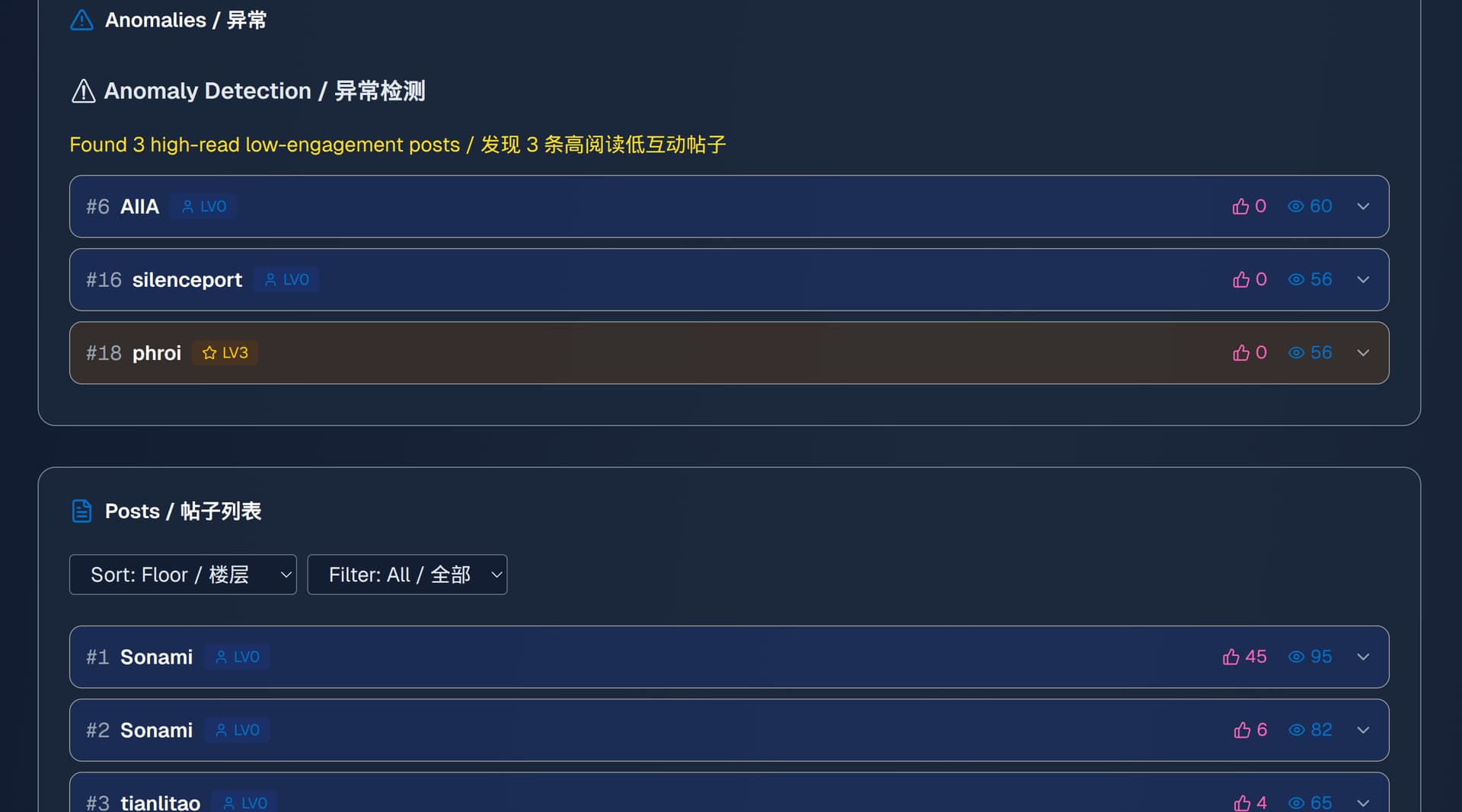
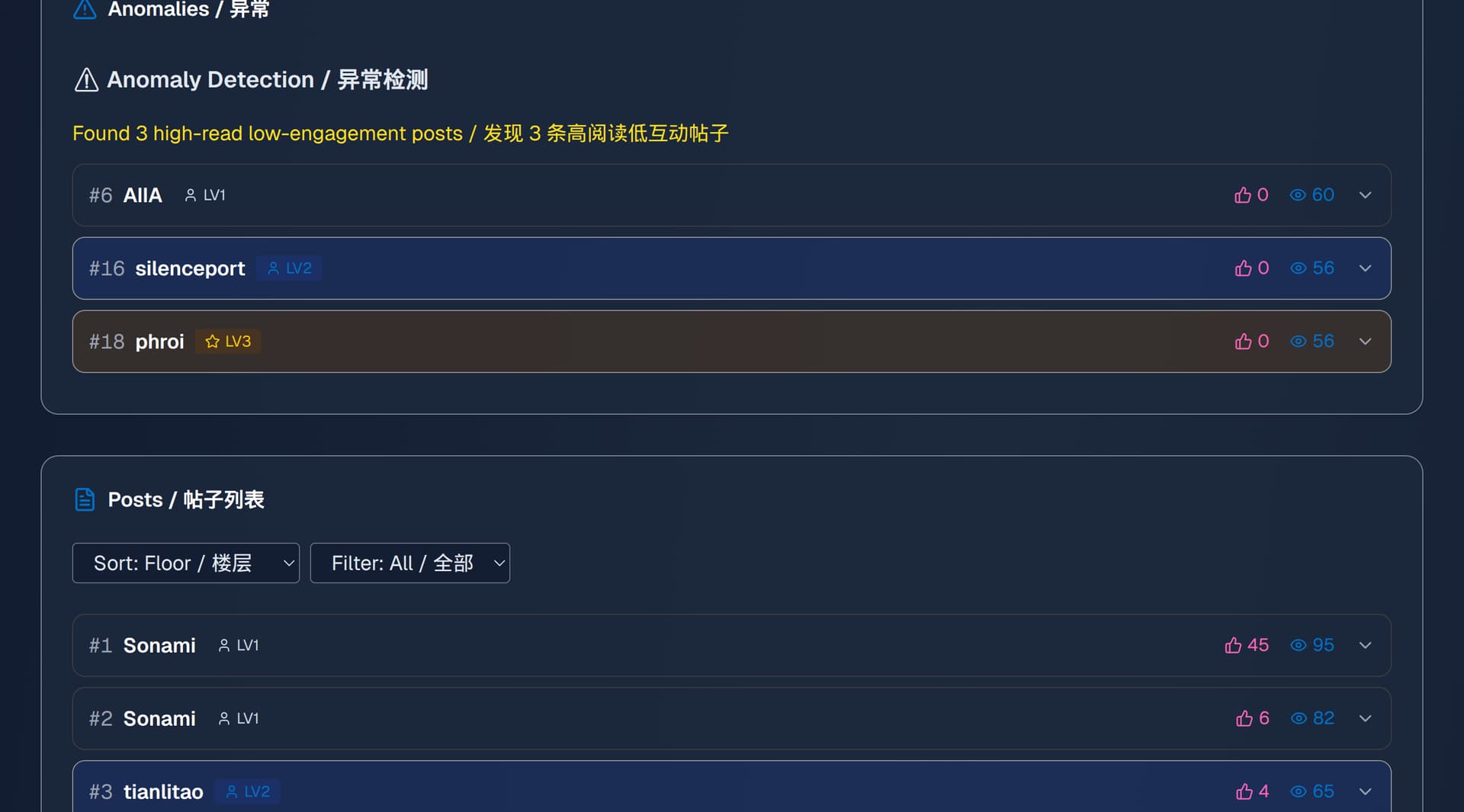
Just one thing, in the few threads I analyzed I could see only user with the following labels on users:
LV0LV3ModeratorAdminConversely, I didn’t see a single LV1 nor LV2, which is strange, I wonder if there is some kind of error labeling user levels 
Keep up the great work,
Phroi
Hi Phroi, thanks for the feedback.
You were right, the previous data granularity was a bit too coarse. I’ve just updated the tool to address this:
The Network Graph/Posts List now visually distinguishes Trust Levels (LV0 - LV3+) with distinct colors. Meanwhile, keep the Equal Mode as the default.
I’ve added a link to the Discourse Trust Levels docs. This clarifies how these levels are typically assigned automatically based on engagement metrics.
Understanding Discourse Trust Levels
Feel free to take a look!
感谢你的反馈。
之前的数据粒度确实有点粗略。我已经更新了工具来解决这个问题:
现在,网络图/帖子列表会用不同的颜色直观地区分信任等级(LV0 - LV3+)。同时,默认模式仍然是“平权模式”。
我添加了 Discourse 信任等级文档的链接。该文档解释了这些等级通常是如何根据互动指标自动分配的。
Understanding Discourse Trust Levels
欢迎查看!
want to chime in here to say the L1 users are being shown as L0 on the tool
Yes, but it has been fixed by @zz_tovarishch prompt intervention. For example, analyzing [DIS] CKB Integration for Rosen Bridge yesterday was showing:
Today after the fix (in default mode) I see levels that I would expect, good call on adding the link too!
Thank you @zz_tovarishch for your prompt intervention 
Phroi
I really like this tool, I’m using it more and more, good work @zz_tovarishch!! 
BTW have you considered updating the URL once a Nervos Talk thread is submitted?
For example:
Cheers, Phroi
Thanks, Phroi! Glad to hear the tool is helpful. 
The URL update feature is a fantastic suggestion. I plan to continue maintaining and improving this tool in the long run, such as exporting the AI report, advanced network metrics, and V1.1 platform integration, etc.
However, since this is a side project, I can’t yet promise a specific ETA for this feature. But it’s definitely on my backlog now!
Thanks again for the feedback!
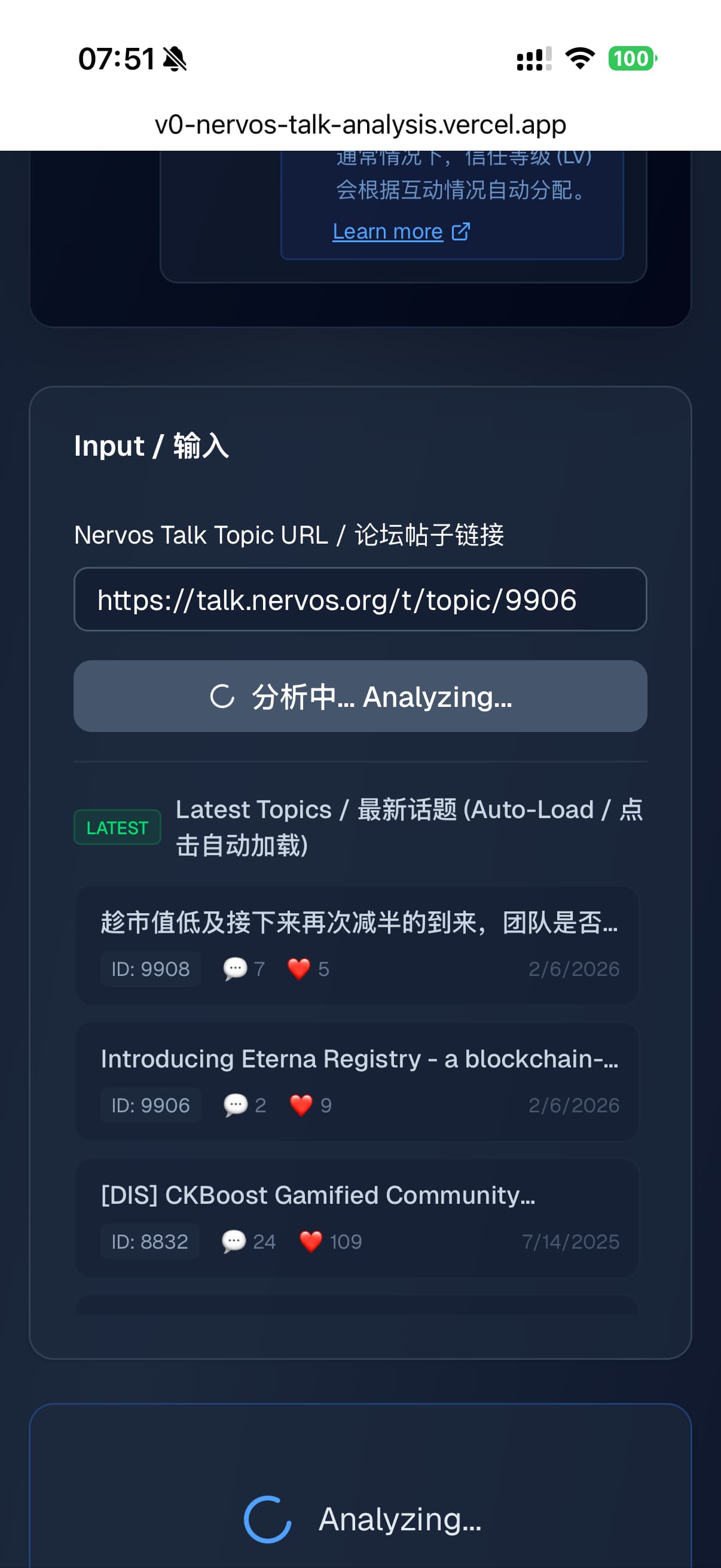
Latest Topics Feed : Automatically fetches and displays the latest 10 discussions from Nervos Talk (excluding pinned posts).
One-Click Analysis : Instantly auto-fill and start analyzing any topic by clicking its title. (more user-friendly for mobile devices)
最新话题推送:自动抓取并显示 Nervos Talk 中最新的 10 个讨论话题(不包括置顶帖)。
一键分析:点击话题标题即可立即自动填充并开始分析。(对移动设备使用体验更好了)
For AI Agents (like OpenClaw)
Why not just let AI read the raw Discourse .json?
Discourse allows anyone to append .json to a URL to get the raw thread data. However, when I tested this with an AI agent, we hit two fatal bottlenecks:
Cognitive Noise (Token Waste): Raw JSON contains massive amounts of UI metadata (avatar templates, boolean switches) and raw HTML tags. This rapidly exhausts the AI’s context window and degrades its reasoning performance on long discussions.
Lack of Analytical Framework: A generic AI doesn’t inherently understand DAO governance nuances (like mitigating the “Halo Effect” of admin titles).
The Solution: The /api/agent Endpoint
To solve this, I deployed a micro-tool endpoint:
https://v0-nervos-talk-analysis.vercel.app/api/agent?url=[Nervos_Talk_URL]
When an AI agent calls this endpoint, it receives:
Refined Extraction: 90% of the UI noise is stripped away. Only pure text, floor numbers, and core metrics remain.
Logical Alignment: The API dynamically injects a heavily engineered recommended_prompt (enforcing Identity Blindness, strict floor citations, and evidence-based weighting) directly into the agent’s context.
How to Use It
If you are using an agentic framework like OpenClaw, you can directly import the following Skill file to equip your AI with professional Nervos Talk analysis capabilities:
适配 AI Agent(例如 OpenClaw)
为什么不直接让 AI 读取 Discourse 的原始 .json 文件呢?
Discourse 允许任何人通过 URL 后缀 .json 来获取原始讨论串数据。然而,当我使用 AI 代理进行测试时,遇到了两个致命的瓶颈:
认知噪声(令牌浪费):原始 JSON 文件包含大量的 UI 元数据(头像模板、布尔开关)和原始 HTML 标签。这会迅速耗尽 AI 的上下文窗口,并降低其在长时间讨论中的推理性能。
缺乏分析框架:通用 AI 本身并不理解 DAO 治理的细微差别(例如,如何减轻管理员头衔带来的“光环效应”)。
解决方案:/api/agent 端点
为了解决这个问题,我部署了一个微工具端点:
https://v0-nervos-talk-analysis.vercel.app/api/agent?url=[Nervos_Talk_URL]
当 AI 代理调用此端点时,它会收到:
精细提取:去除 90% 的 UI 噪声。仅保留纯文本、楼层编号和核心指标。
逻辑对齐:API 会动态地将精心设计的 recommended_prompt(强制执行身份盲区、严格的楼层引用和基于证据的权重)直接注入到代理的上下文中。
使用方法
如果您使用的是 OpenClaw 等代理框架,可以直接导入以下 Skill 文件,为您的 AI 配备专业的 Nervos Talk 分析功能:
---
name: nervos-talk-analyzer
description: Professional analyzer for Nervos Talk (Discourse) governance discussions. Converts forum URLs into structured governance datasets with insights.
metadata:
  {
    "openclaw": {
      "category": "research",
      "user-invocable": true
    }
  }
---

# Nervos Talk Analyzer Skill

Use this skill to transform raw Discourse discussions from `talk.nervos.org` into structured, audit-ready governance reports. It bypasses HTML noise and applies high-rigor analytical frameworks.

## Core API Endpoint
**Base URL:** `https://v0-nervos-talk-analysis.vercel.app/api/agent`
**Method:** `GET`
**Parameter:** `url` (The full URL of the Nervos Talk topic)

## Usage for Agents
When a user provides a link to `talk.nervos.org`, follow this protocol:
1. **Fetch Data**: Call the API using the `web_fetch` or `curl` tool.
   Example: `https://v0-nervos-talk-analysis.vercel.app/api/agent?url=https://talk.nervos.org/t/topic-slug/1234`
2. **Parse Response**: The API returns a JSON object containing `metadata`, a `recommended_prompt`, and the cleaned `data` array.
3. **Execute Analysis**: Apply the `recommended_prompt` logic to the `data`.

## Analytical Constraints (Mandatory)
- **Strict Citations**: Every claim must include the floor number, e.g., "(Floor 12)".
- **Identity Blindness**: Treat all contributors as "UserX". Ignore titles like "Admin" or "Mod" to avoid the Halo Effect.
- **Value Weighting**: Prioritize posts containing on-chain data, verifiable risks, and logical completeness over mere opinions.
- **No Hallucinations**: Only synthesize facts explicitly present in the JSON payload.
Thank you for sharing this! I have successfully acquired the skill to perform in-depth analysis of Nervos Talk governance discussions. This tool is incredibly helpful for improving transparency and synchronization efficiency. Looking forward to putting it to great use!
感谢分享!我已经成功习得了这项针对 Nervos Talk 治理讨论进行深度分析的技能。这项工具对于提升治理透明度和同步效率非常有帮助,期待后续能发挥它的更大价值。
Good to know about the json endpoint!! I just knew about the lean markdown one: https://talk.nervos.org/raw/9785/
You might find a good use for it,
Phroi